3 Simple Ways to Encourage Your Child to Use More Words
By TalkpebbleUpdated
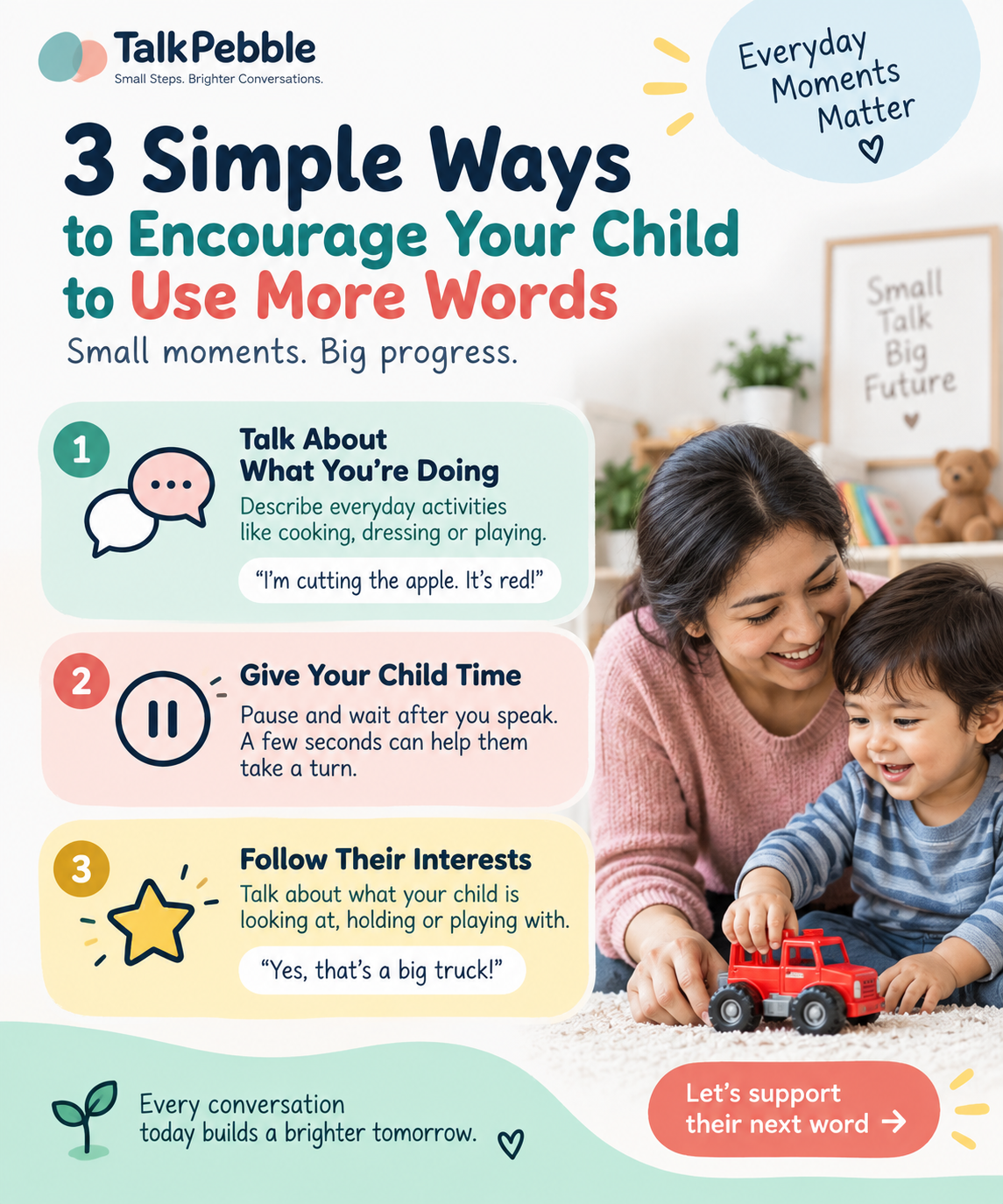
3 Simple Ways to Encourage Your Child to Use More Words
Everyday moments can create valuable opportunities for children to communicate. You don’t always need a special activity or a long practice session. Talking, waiting, and following your child’s interests can become part of normal family routines.
Here are three simple things parents can try.
1. Talk about what you’re doing
Children hear language throughout the day. Use everyday activities as opportunities to describe what is happening.
For example, while playing:
«“Big truck!”»
During mealtime:
«“I’m cutting the apple.”»
During bath time:
«“Water is warm.”»
Keep your language simple and connected to what your child can see or experience.
2. Give your child time to respond
After you say something, give your child a moment to respond.
It can be tempting to immediately repeat the question, give the answer, or move on. Instead, try pausing and giving your child a chance to communicate in their own way.
A response doesn’t always have to be a word. Your child might point, make a sound, use a gesture, or say part of a word.
The goal is to create an opportunity for interaction.
3. Follow your child’s interests
Pay attention to what your child is already interested in.
If your child is playing with a truck, talk about the truck. If they are looking at an animal, talk about the animal.
For example:
«Child points to truck.»
«Parent: “Yes! Truck. Big truck!”»
Following your child’s interest can make communication more natural because you’re talking about something that already has their attention.
Keep it simple
Parent-led communication support works best when strategies can fit naturally into family life. Research on parent-mediated intervention highlights the importance of parent training, practical guidance, and activities that fit into everyday routines.
You don’t need to turn every moment into a lesson.
Try this simple pattern:
Talk → Pause → Listen → Respond
Small interactions throughout the day can give your child more opportunities to communicate.
When should you seek professional guidance?
If you’re concerned about your child’s speech or language development, consider discussing your concerns with a qualified speech-language professional or your child’s healthcare provider.
An app or online resource can provide guidance and support, but it should not replace professional assessment when there are concerns about development.
Try it today
During your child’s next play session:
1. Follow what they are interested in.
2. Describe what they are doing.
3. Pause and give them time to respond.
4. Respond positively to their communication.
Keep it relaxed and part of the activity.
Small steps. Brighter conversations.
TalkPebble is designed to help parents learn practical communication strategies and bring them into everyday interactions with their children.
Start with one small moment today
Get simple parent-guided activities for everyday routines — download the app and start with one small moment today.

TalkPebble provides educational information only and does not diagnose or treat any condition.